Climate Change and the Desert
The desert -- just like the mountains of West Virginia and the tundra of the Arctic -- faces the grim reality of human-induced climate change caused by fossil fuel emissions from our vehicles and power plants. The current and future impacts of human-induced climate change on the desert make it even more urgent to be good stewards of our wildlands here in the southwest. A 16 May workshop for the Desert Renewable Energy Conservation Plan (DRECP) outlined some of the expected changes in the desert. Here are numbers to be concerned about:
We are already seeing the impacts of climate change in the desert, but the project impacts yet to come would have even more massive results. Desert species are well-adapted to the heat, but they depend on a delicate ecological balance and sparse, but well-timed rains and dry seasons. Prolonged droughts, invasive plant species, the loss of natural springs, and a changing mix of vegetation (and thus, food source for wildlife) will challenge the ability for our ecosystems to keep pace.
Not surprisingly, some of the desert species that are expected to be the most vulnerable to climate change are dependent on rare riparian habitat, according to research presented at the DRECP workshop. They include the Owens Pupfish, Southwestern Willow Flycatcher, and Mohave Tui Chub. Other species of high sensitivity to climate change include Parish's Phacelia, California leaf-nosed bat, and the Arroyo Toad. The study listed other species of concern, but less so than the "high sensitivity" species listed above: Mohave Ground Squirrel, Desert Tortoise, and the Barstow Wooly Sunflower.
An unfortunately common response to human-induced climate change is to
replace mountaintop removal coal mining with desert-destroying solar,
and natural gas wells with thousands of massive industrial wind turbines; championing one industrial behemoth over another. It is
important to have a solution -- something "good"-- to campaign for, but
greenwashing an industry that views conservation as a "policy threat" is
a blatant compromise of our principles and conservation ethic. That is why energy efficiency and distributed generation are true grassroots solutions to climate change. Generating power locally at the point of use, and cutting down on wasteful energy vampires. California's leading energy efficiency standards have allowed the state to maintain energy consumption roughly even for three decades while other states have increased consumption as much as 40%.
But we still have easy steps we can take to cut our consumption. A new standard in California will require cell phone chargers and other energy vampires to be more efficient, and is expected to save enough electricity to power 350,000 homes, and save ratepayers up to 306 million dollars.
Meanwhile, California has already installed over 115,000 rooftop solar installations, generating over 1,200 megawatts of local clean energy. That's enough to replace a couple Reid Gardner coal power plants, and is three times more energy than will be produced at BrightSource Energy's Ivanpah Solar power project, which has destroyed 5.6 square miles of pristine desert, and has killed or displaced over 130 desert tortoises. The most innovative aspect of clean energy technology is that we can generate energy just about anywhere. With so many empty places to put solar panels in our cities, we can finally give our wildlands a break.
- By 2050, the annual mean temperature in the Mojave Desert could climb as much as 4.7 degrees Fahrenheit. The mean temperature in the Sonoran Desert could climb as much as 4.3 degrees Fahrenheit.
- Mean annual precipitation could fall by as much as 2.6 inches in the Mojave, and 2.2 inches in the Sonoran Desert by 2050.
- Hot spells in both deserts would be more frequent/prolonged, with up to 27 more days per year experiencing temperatures above 90 degrees Fahrenheit in the Mojave Desert.
We are already seeing the impacts of climate change in the desert, but the project impacts yet to come would have even more massive results. Desert species are well-adapted to the heat, but they depend on a delicate ecological balance and sparse, but well-timed rains and dry seasons. Prolonged droughts, invasive plant species, the loss of natural springs, and a changing mix of vegetation (and thus, food source for wildlife) will challenge the ability for our ecosystems to keep pace.
Not surprisingly, some of the desert species that are expected to be the most vulnerable to climate change are dependent on rare riparian habitat, according to research presented at the DRECP workshop. They include the Owens Pupfish, Southwestern Willow Flycatcher, and Mohave Tui Chub. Other species of high sensitivity to climate change include Parish's Phacelia, California leaf-nosed bat, and the Arroyo Toad. The study listed other species of concern, but less so than the "high sensitivity" species listed above: Mohave Ground Squirrel, Desert Tortoise, and the Barstow Wooly Sunflower.
 |
| A vulnerability matrix categorizing desert species and their likely vulnerability to human-induced climate change. From the DRECP Workshop on Climate Change. Click to enlarge. For another source on climate change models in the desert, see "Climate Change and Ecosystems of theSouthwestern United States" [PDF] |
But we still have easy steps we can take to cut our consumption. A new standard in California will require cell phone chargers and other energy vampires to be more efficient, and is expected to save enough electricity to power 350,000 homes, and save ratepayers up to 306 million dollars.
Meanwhile, California has already installed over 115,000 rooftop solar installations, generating over 1,200 megawatts of local clean energy. That's enough to replace a couple Reid Gardner coal power plants, and is three times more energy than will be produced at BrightSource Energy's Ivanpah Solar power project, which has destroyed 5.6 square miles of pristine desert, and has killed or displaced over 130 desert tortoises. The most innovative aspect of clean energy technology is that we can generate energy just about anywhere. With so many empty places to put solar panels in our cities, we can finally give our wildlands a break.
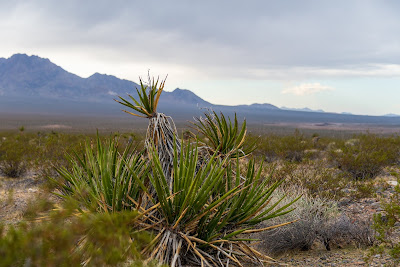

All the more reason to stop Cadiz from pumping the aquifer dry to water the golf courses in southern Orange County.
ReplyDeleteExcellent post as usual.