Calico Solar Project: Corporation Shows Contempt for Environmental Concerns
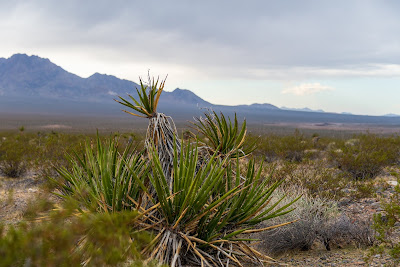
Despite requests by an array of environmental groups to prevent destruction of critical desert habitat in the Pisgah Valley in the central Mojave Desert, the Department of Interior and K Road Power continue to move forward with plans to permit and build the Calico Solar project. The project footprint has only been slightly redesigned, but would still destroy at least 6 square miles of desert habitat for photovoltaic solar panels -- the same technology that can be deployed on rooftops or already-disturbed lands. The public lands targeted for the proposed project site host a diverse array of birds, reptiles, mammals, and plants, prompting concern from desert conservationists that the massive project will block wildlife connectivity across the central Mojave.
Modifications Miss the Point
The modified layout of the Calico Solar project provides a 158 acre "habitat connectivity" zone through the center of the project -- that is less than a quarter square mile of total habitat that would be surrounded by solar panels, and probably subjected to increased erosion and invasive plant species as a result of the nearby project.
What K Road Power does not seem to understand is that marginal adjustments to a 6 square mile solar facility still leave us with massive habitat loss for rare plants and animals. Levelling this desert habitat will leave a scar that will take centuries to repair, long after the solar facility is shut down. Our deserts need open and intact habitat that allows connectivity across each desert species' population. As our deserts face climate change, urban sprawl, off-road recreation, and expanding military training bases, now is not the time to unnecessarily bulldoze 6 square miles when better alternatives exist.
Chorus of Opposition
The Sierra Club, Defenders of Wildlife, and the Natural Resources Defense Council (NRDC) filed a legal challenge against the project in March after repeated requests to the Department of Interior to take a closer look at the project's environmental impacts. The groups suggest nearby already-disturbed lands as a better alternative location. An earlier legal challenge in the California Supreme Court failed, but the groups persisted and filed a second challenge in Federal Court as the project assumed new ownership and applied for permit modifications.
The Department of Interior acknowledged the importance of the Pisgah Valley in its Solar Energy Development program by removing a proposed "Solar Energy Zone" that would have fast-tracked even more industrial-scale energy development in the area. But Interior has refused to take a closer look at the Calico Solar project and has even listed it as a "priority project," the successor to the "fast track" process that result in environmental disaster in the Ivanpah Valley.
Calico's original layout was approved by the California Energy Commission (CEC) and the Department of Interior in late 2010 after a contentious review process that highlighted the significant environmental harm the project would cause. The project's original owner, Tessera Solar, fought to silence scientific experts and even excluded some environmental groups when it reconfigured the layout of the project to gain a hasty approval in 2010. Tessera Solar abruptly sold the project to K Road Power after winning approval, and K Road now has to submit for a renewed approval since it plans to use a different solar technology on the site.
New Transmission Required
Utility company Southern California Edison would have to build up to 70 miles of new transmission lines to connect the Calico Solar project with the grid, if it is approved, even though the Department of Interior has dropped plans for the Solar Energy Zone in the Pisgah Valley. The Lugo-Pisgah Transmission line is likely to be an expensive boondoggle that would cost ratepayers more money. A slightly longer transmission line in San Diego County -- the Sunrise Powerlink -- County cost upwards of two billion dollars. Costs are passed along to electricity customers, who would probably rather be given that money to install rooftop solar panels or make energy efficiency upgrades.
According to a status report submitted by K Road Power to the CEC in September, the company is in negotiations with Southern California Edison regarding unspecified transmission issues, and expects to have these resolved in December 2012, or later. So the environmental review of the project's modifications by the CEC probably will be on hold until after K Road resolves the transmission issues. But with the CEC and Department of Interior primed to conduct a fast-track review of the project modifications, approval could come quickly after the transmission issues are sorted out.
 |
| [Click on image to expand] A screenshot of the modified layout of the Calico Solar project, which would be built by K Road Power |
The modified layout of the Calico Solar project provides a 158 acre "habitat connectivity" zone through the center of the project -- that is less than a quarter square mile of total habitat that would be surrounded by solar panels, and probably subjected to increased erosion and invasive plant species as a result of the nearby project.
What K Road Power does not seem to understand is that marginal adjustments to a 6 square mile solar facility still leave us with massive habitat loss for rare plants and animals. Levelling this desert habitat will leave a scar that will take centuries to repair, long after the solar facility is shut down. Our deserts need open and intact habitat that allows connectivity across each desert species' population. As our deserts face climate change, urban sprawl, off-road recreation, and expanding military training bases, now is not the time to unnecessarily bulldoze 6 square miles when better alternatives exist.
 |
| Photo by Lara Hartley Photography. Screenshot of white-margined beardtongue from Sierra Club prehearing conference statement to the California Energy Commission in 2010. The white-margined beardtongue is a rare desert plant found in only a few places in the Mojave Desert, including on the site of the proposed Califo Solar project. |
The Sierra Club, Defenders of Wildlife, and the Natural Resources Defense Council (NRDC) filed a legal challenge against the project in March after repeated requests to the Department of Interior to take a closer look at the project's environmental impacts. The groups suggest nearby already-disturbed lands as a better alternative location. An earlier legal challenge in the California Supreme Court failed, but the groups persisted and filed a second challenge in Federal Court as the project assumed new ownership and applied for permit modifications.
The Department of Interior acknowledged the importance of the Pisgah Valley in its Solar Energy Development program by removing a proposed "Solar Energy Zone" that would have fast-tracked even more industrial-scale energy development in the area. But Interior has refused to take a closer look at the Calico Solar project and has even listed it as a "priority project," the successor to the "fast track" process that result in environmental disaster in the Ivanpah Valley.
Calico's original layout was approved by the California Energy Commission (CEC) and the Department of Interior in late 2010 after a contentious review process that highlighted the significant environmental harm the project would cause. The project's original owner, Tessera Solar, fought to silence scientific experts and even excluded some environmental groups when it reconfigured the layout of the project to gain a hasty approval in 2010. Tessera Solar abruptly sold the project to K Road Power after winning approval, and K Road now has to submit for a renewed approval since it plans to use a different solar technology on the site.
New Transmission Required
Utility company Southern California Edison would have to build up to 70 miles of new transmission lines to connect the Calico Solar project with the grid, if it is approved, even though the Department of Interior has dropped plans for the Solar Energy Zone in the Pisgah Valley. The Lugo-Pisgah Transmission line is likely to be an expensive boondoggle that would cost ratepayers more money. A slightly longer transmission line in San Diego County -- the Sunrise Powerlink -- County cost upwards of two billion dollars. Costs are passed along to electricity customers, who would probably rather be given that money to install rooftop solar panels or make energy efficiency upgrades.
 |
| This map by Southern California Edison shows the approximate path of the proposed Lugo-Pisgah transmission line, which would cross through Lucerne Valley to reach the Calico Solar project. |


You can also thank the California legislature and the Governor http://articles.latimes.com/2012/may/11/local/la-me-solar-calico-20120511
ReplyDelete