Mojave Desert 2020

Consider the case of the Ivanpah Solar Energy Generation System (ISEGS) in the Northeastern portion of the Mojave Desert as an example. Although the footprint of the site is not all that large (approximately 4,000 acres) considering that ISEGS will actually provide much needed renewable energy, the affect the site has on the Mojave as a whole will be larger. Some of the effects of the construction and operation of the site are listed below, and should be grounds for considering less critical alternative sites in California.
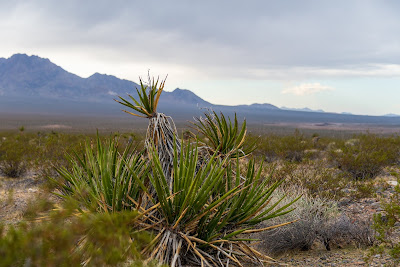
1.) Habitat quality -- the Ivanpah site would be constructed on high quality desert habitat rich in species diversity. Given that there are more suitable locations for construction that have lower quality habitat (and thus impact fewer species), granting Ivanpah unrestricted right of way on their proposed site would unnecessarily deprive the Mojave of key habitat.
2.) Endangered Species -- Brightsource Energy, the utility company that wants to build on the public land in Ivanpah, pointed out that the proposed site is not listed as critical desert tortoise (an endangered species) habitat. While this is true, they overlook the fact that the desert tortoises living on the proposed site belong to a genetically unique desert tortoise population (at least 25 desert tortoises spotted on the site to date). Building on the site would further deprive (the species has already experienced a 9% decline since 2005) the Mojave of even more desert tortoises that are needed to maintain a healthy desert tortoise population throughout the desert. The site is also home to several species of rare plants, and plants that may not be listed as rare because of bureaucratic process, but are certainly do not have expansive populations.
3.) Future Development -- The EIS for the Ivanpah did not properly consider the impact of the ISEGS site on future development in the Ivanpah valley. If ISEGS begins operating in Ivanpah, there is a good chance that other energy companies will seek to develop in the area and have similar impacts to habitat and endangered species.
Other long-term impacts that should be considered apply generally to any siting application in the Mojave:
4.) Fragmentation of the Mojave -- Without careful consideration the California Energy Commission and BLM may end up approving right-of-way for multiple large projects that ultimately break up what is now relatively intact wilderness. Construction proposals ranging from Ivanpah, Amboy, Joshua Tree and Hinckley could disrupt the broader Mojave ecosystem by a.) disturbing Bighorn sheep migration, b.) reducing desert tortoise populations (direct impact, or impact through increased raven populations), c.) depletion of valuable ground aquifers to meet water demands of the sites and d.) introduction of invasive plant species.



Comments
Post a Comment